
Master Course: Data Enabled Design
Year: 2026
Group project
The project followed a data-enabled design approach in which data was used as a material for both research and design. Data was not only treated as a way to validate concepts, but also to understand the context, identify design opportunities and shape the intervention.
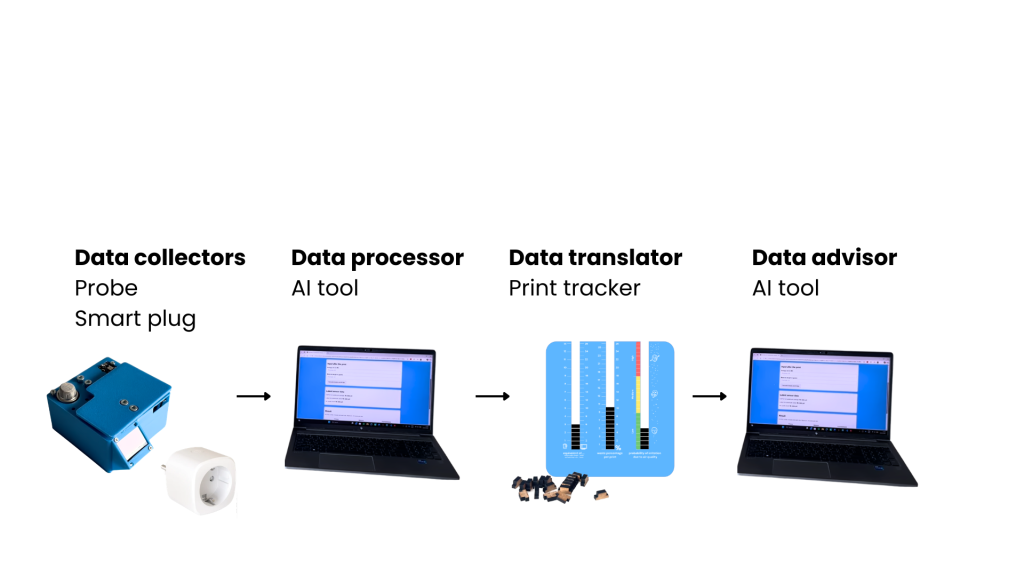
For many Industrial Design students 3D printing at home plays an important part in their design processes. While it supports experimentation and rapid prototyping, it also comes with material waste, energy consumption, and gas emissions. This study explored how students experience and
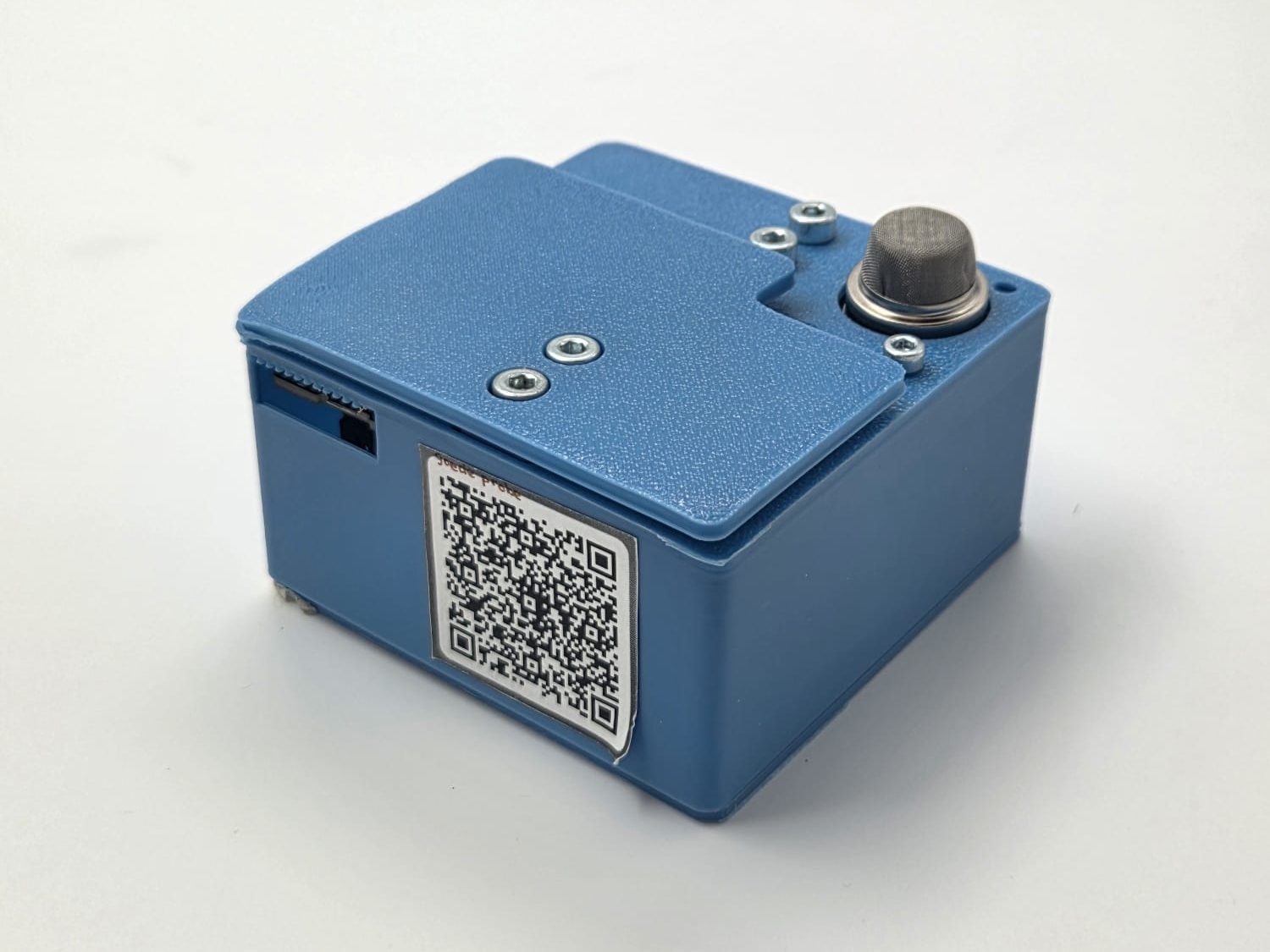
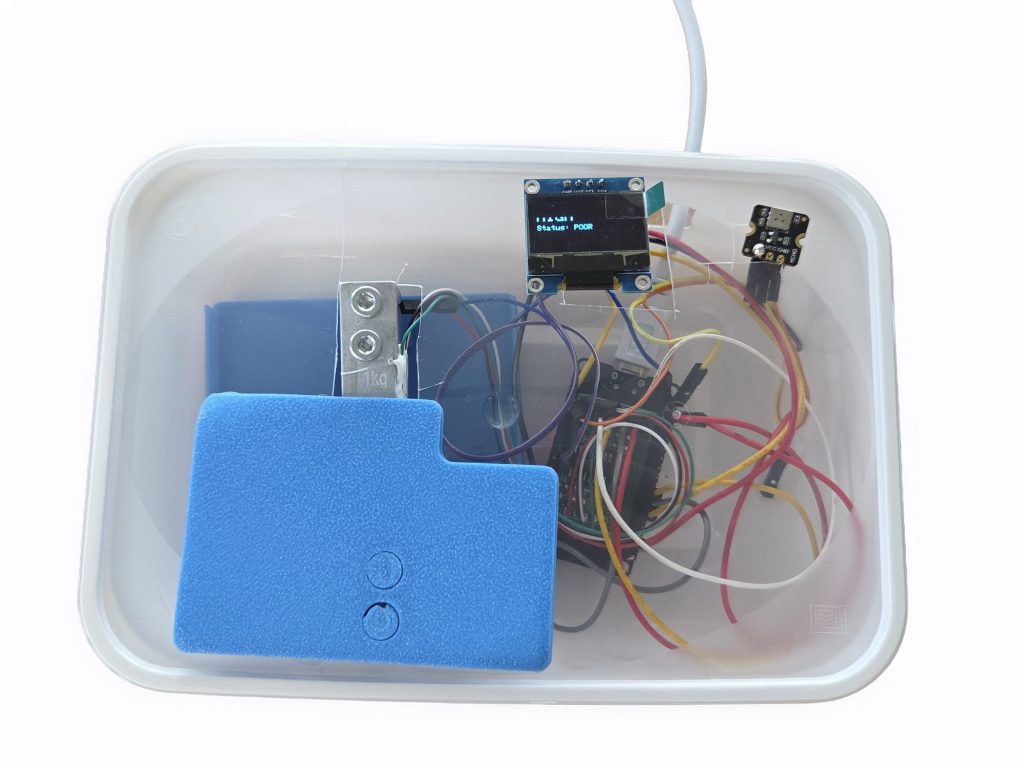
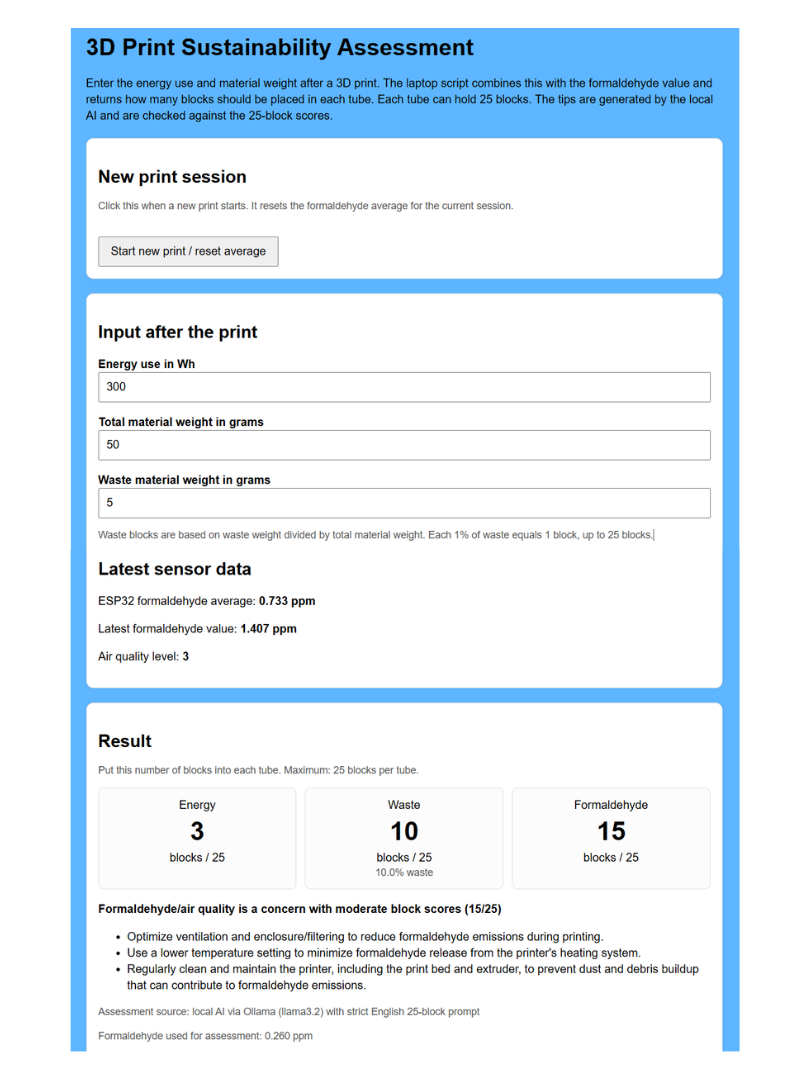
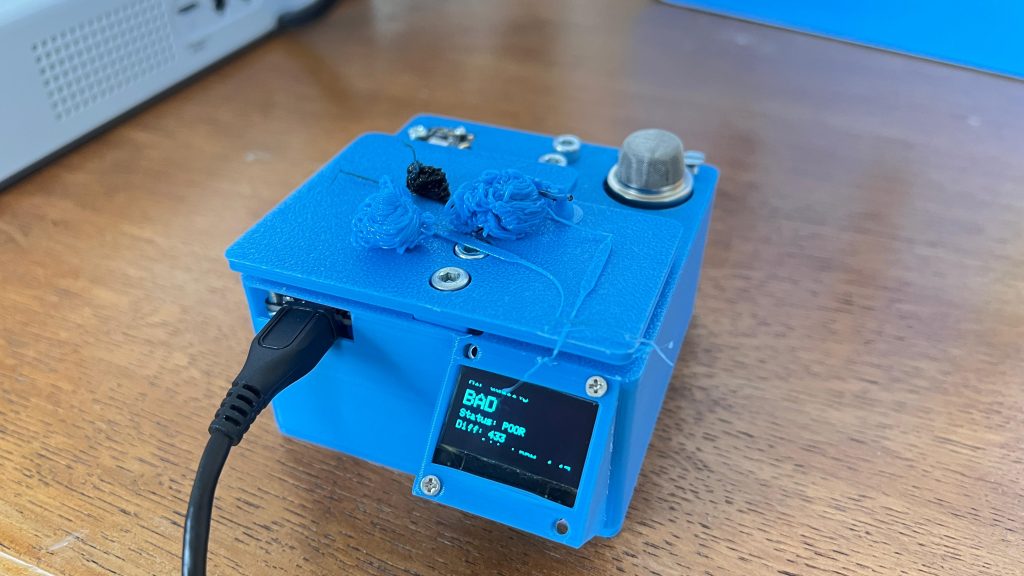
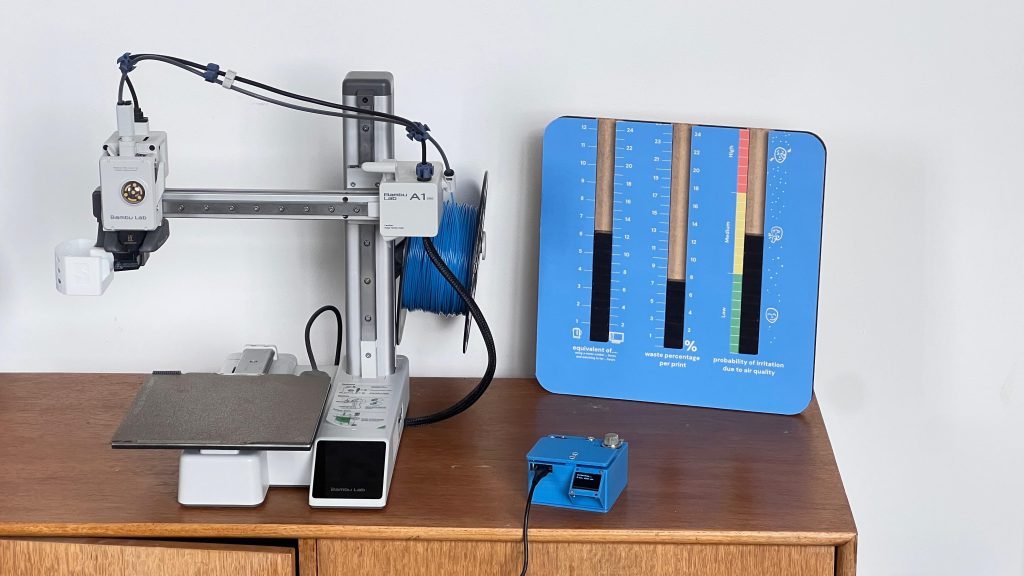
consider this environmental impact during 3D print activities. A contextual exploration was done through a sensor-based probe, digital forms, and data-enabled interviews. Findings showed that sustainability is experienced secondary to convenience, time, and cost. Moreover, the environmental impact often remains abstract and difficult to interpret. This inspired a design to turn the “toxic” relationship between students and their printer into a healthy one through tangible representations, relatable comparisons and actionable feedback.